Examining how families live together globally reveals how culture shapes everyday life at home.
Family living arrangements around the world vary widely across cultures, shaped by economic conditions, traditions, housing, and social expectations. In some countries, multigenerational households are the norm, while in others, independence is emphasized from an early age. These differences influence daily life, caregiving, and how people understand responsibility to one another.
Rather than one “correct” family structure, societies develop living patterns that reflect what they value most, whether that is autonomy, stability, collective support, or flexibility.
Multigenerational Households as the Norm
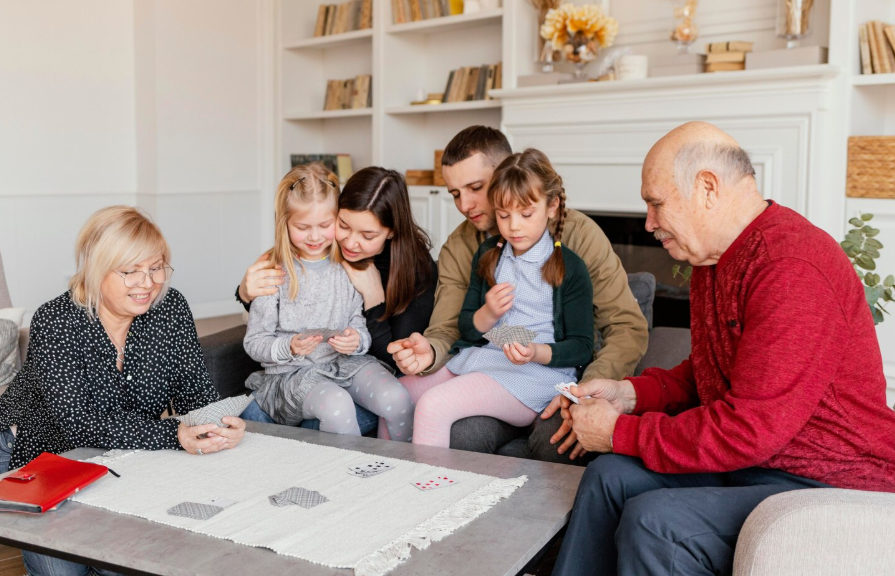
In many parts of Asia, Africa, and Latin America, it is common for multiple generations to live under one roof. Grandparents, parents, and children often share space, resources, and responsibilities. This arrangement supports childcare, elder care, and financial stability, especially where public support systems are limited.
In countries like India or China, multigenerational living is often tied to cultural values of respect and duty. Adult children are expected to care for aging parents, and grandparents frequently help raise grandchildren. Living together reinforces family bonds and continuity.
Economic factors also play a role. Shared housing reduces costs and allows families to pool income. In rapidly urbanizing regions, extended-family homes offer security in uncertain job markets.
Explore How Parenting Styles Differ Across Countries for cultural child-rearing perspectives.
Nuclear Families and Independence
In many Western countries, the nuclear family model—parents and children living separately from extended relatives—has been dominant for decades. Cultural emphasis on independence encourages young adults to move out early, often for education or work.
In the United States, Canada, and parts of Northern Europe, living independently is seen as a milestone of adulthood. Privacy, personal space, and self-reliance are highly valued. Elder care is often handled through assisted living facilities or external services rather than within the home.
This model offers flexibility but can also lead to isolation, particularly for older adults. As populations age, some countries are reassessing how independence and support can coexist.
See Most Common Superstitions Across Cultures for belief-driven traditions.
Shared Childcare and Community Support
In cultures where extended families live together or nearby, childcare is often a shared responsibility. Relatives, neighbors, and community members contribute to raising children, reducing pressure on parents.
In parts of Africa and Southeast Asia, it is common for children to spend time in multiple households, learning from various adults. This approach emphasizes collective responsibility and social integration rather than exclusive parental control.
By contrast, in societies with smaller households, childcare is more structured and formal. Daycare centers, schools, and paid caregivers fill roles once handled by extended family members.
Read How Holidays Are Celebrated Differently Across Cultures for social traditions.
Elder Care and Cultural Expectations
How families care for aging relatives reveals deep cultural values. In Japan and South Korea, traditions emphasize filial duty, though modern pressures have complicated these expectations. Smaller homes and longer working hours make multigenerational living more challenging than in the past.
In Southern Europe, such as Italy or Spain, elderly parents often live close to or with adult children. Family-based care remains common, supported by strong social ties and frequent contact.
In countries with robust public healthcare and social services, elder care is more institutionalized. While this reduces family burden, it can also distance generations from daily interaction.
Check How Expats Choose Where to Move (Top Factors Worldwide) for relocation influences.
Changing Family Structures
Global trends are reshaping family living arrangements everywhere. Rising housing costs, delayed marriage, and longer life expectancy have led to more adults living with parents longer, even in cultures that prioritize independence.
Urbanization also affects family life. Smaller living spaces make large households less practical, while migration separates families across cities or countries. Technology now plays a role in maintaining family connections when physical proximity is impossible.
These changes do not erase traditional values but adapt them to modern realities. Families continue to find ways to balance closeness and independence.
Ultimately, how families live together reflects what societies believe families are for. Whether sharing a home or living apart, family living arrangements around the world evolve to meet cultural, economic, and emotional needs. There is no universal model—only different solutions to the same human desire for connection and support.